Censys finds about 1,465 internet-exposed ARTEX consoles, an open-source AI pentesting tool already used in several attacks
Internet scanning firm Censys reported on 5 November that, as of 4 November, it saw 1,465 hosts running an internet-exposed ARTEX console, or about 815 distinct deployments after removing two blocks of identically configured hosting. ARTEX is an open-source, LLM-driven autonomous penetration-testing framework released in July that CrowdStrike and Microsoft have tied to attacks on South Korean financial institutions and ConnectWise customers.
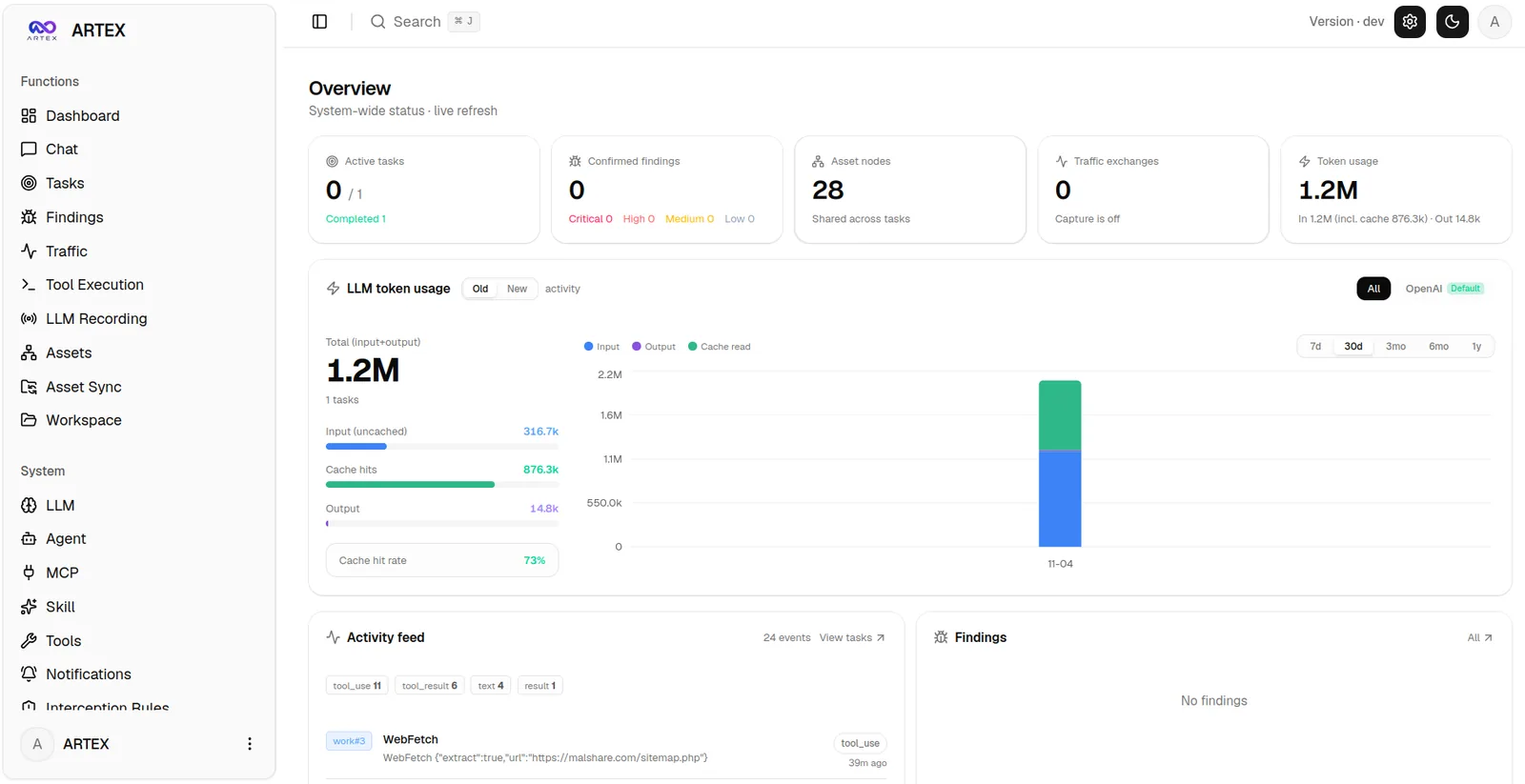
Censys says ARTEX was published on GitHub on 26 July 2026 under the AGPL-3.0 license. It is written in Go with a Next.js web console: a planner agent turns a user’s goal into attack intents, worker agents claim those intents, run tools such as nmap and write results back, looping until the goal is met, and it works with Anthropic, OpenAI or any OpenAI-compatible model endpoint. The report says the server named by CrowdStrike had open directories from 18 August, seven weeks before CrowdStrike’s report, and that the attacker used DeepSeek v4.1-flash as the main model. The developer later said they were not involved in the attacks and announced the project would go closed-source with no further releases; the repository is down, but archived copies, translations and rebrands still circulate.
Beyond the count, Censys found that 155 ARTEX hosts (10.6%) also run at least one other threat, including Vshell, Cobalt Strike and Adaptix C2, and that 32 open directories expose post-exploitation kits, stagers and implants. Because the ARTEX console does not need to face the internet, actual deployment is likely higher. TechCrunch reports that more than 800 deployments were reachable without a password; Silas Cutler, the Censys principal security researcher who wrote the report, said not every instance is malicious and many are run by authorized testers. TechCrunch adds that many ARTEX-linked attacks exploited simple problems such as weak passwords and missing multi-factor authentication.
Sources
- ARTEX: Agentic Asbestos — Censys
- Hundreds of Artex AI hacking tools found publicly exposed to the web — TechCrunch