Anthropic: Claude traced NIST ECDSA seeds to lrand48+timestamps; no user action
On October 16, 2026 Anthropic said Claude recovered the NIST P-192/224/256/384/521 seeds in about half an hour as C-library lrand48 output seeded with 1997–98 Unix timestamps, not a hashed joke passphrase, and stressed this is not a crypto break and requires no user action.
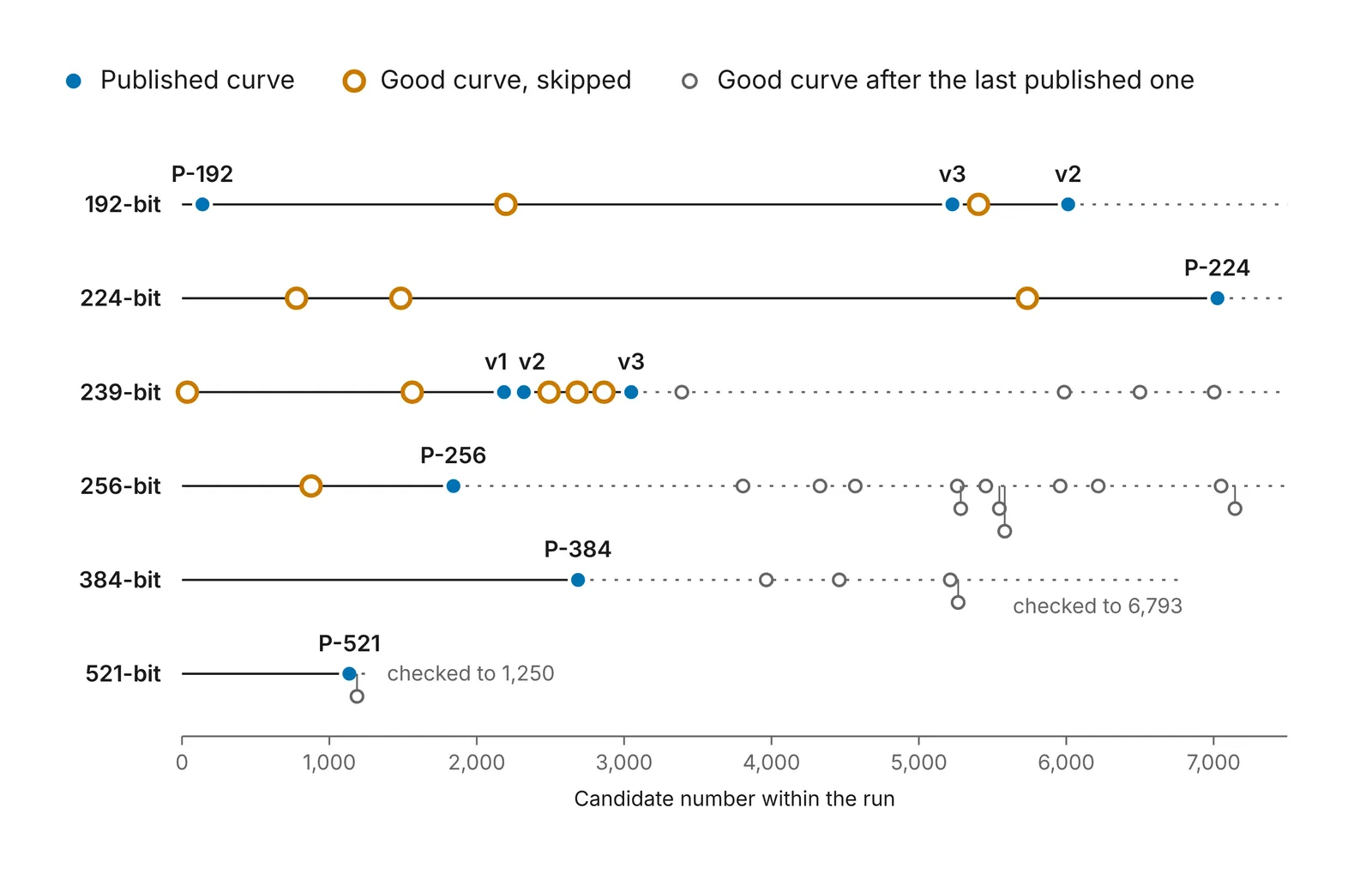
Anthropic published “Claude reveals ECDSA curve origins” on October 16, 2026, saying an employee asked an internal research model—without pointing at the usual clue—and Claude recovered the origins of the NIST prime-field curves P-192, P-224, P-256, P-384 and P-521 in under half an hour. The post opens by framing the result as a fun closing chapter to years of speculation: there is no cryptographic break and “no action to be taken or things to do differently.”
Per Anthropic, the seeds were not hashes of a humorous passphrase but output from the C library’s lrand48 PRNG after seeding with Unix timestamps, then filtered under ANSI X9.62; the prime-curve initializations fall between May 1997 and April 1998. Filippo Valsorda’s same-day post says the Anthropic team claimed his bounty at 01:07:51 UTC on October 15, 2026, and independently restates the algorithm as the POSIX drand48 family with timestamps in 1997–98.
Anthropic presents the finding mainly as closing long-running “backdoored seed” speculation; most researchers already trusted the curves, and the post does not call for key rotation or abandoning ECDSA. For operators, existing NIST-curve deployments do not need an emergency change because of this provenance write-up.
Sources
- Claude reveals ECDSA curve origins — Anthropic
- The NIST Elliptic Curves Seeds Bounty Has Been Claimed — Filippo Valsorda