Meta and Sierra team up with Shopify, Stripe, Walmart and others on Personal Agent Protocol, a standard for how personal AI agents sign in and act for users
Sierra announced that it is developing Personal Agent Protocol, an open standard, with Meta and other companies, setting out how personal AI agents discover a business’s services, sign in on a user’s behalf via OAuth and complete tasks through the website, APIs or the company’s own agent; the v0.1 specification is planned for later this month.
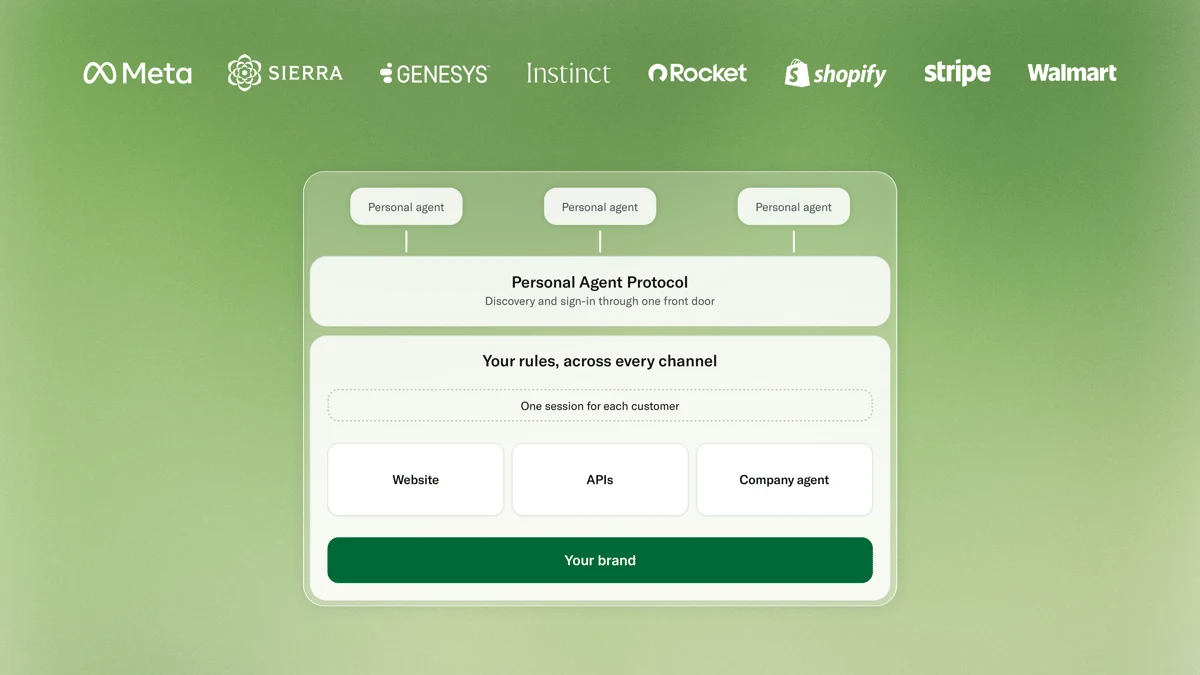
Sierra announced that it and Meta are developing Personal Agent Protocol with industry partners Genesys, Instinct, Rocket, Shopify, Stripe and Walmart. It is an open standard that defines how personal agents interact with businesses, handling authentication, giving consumers control over access and giving companies visibility into what personal agents do through their websites, APIs or company agents, and anyone can implement it.
Sierra says most personal agents today use websites and apps the way people do, loading pages and filling in forms, and when that fails they may call a support line or open a web chat, which is slow and may not finish the job. The protocol’s principle is that consumers decide what access to give their agents, and companies set what those agents can do.
It starts on the company’s website, where an agent discovers what the company offers and how to reach it, then opens a session on the user’s behalf. Checking product availability or a returns policy can be done as a guest; when account access is needed, the user can sign in on the company’s page or use credentials already set up with their agent, and decides whether to grant read-only or write access. The session is built on OAuth and carries across channels, so a question before sign-in and an order change afterward are part of the same visit. The agent then works through whichever route the company chooses: its regular web pages, APIs built on standards such as MCP and OpenAPI, or the company’s own agent for tasks that need conversation, such as a warranty claim.
Sierra plans to publish the v0.1 specification later this month, host design workshops and release a reference implementation to help developers start. It also envisions more detailed per-action permissions, push notifications when a flight is delayed or an order ships, and payment extensions that let an agent complete a purchase without sharing credit card details; these are directions, not released features.
Sources
- Introducing Personal Agent Protocol — Sierra:Blog(RSS)