DeepMind introduces SynthID Bio: a wet-lab-backed watermark proof of concept for AI-designed proteins
Google DeepMind posted about SynthID Bio, embedding watermarks into biological sequences/structures so the signature is verifiable not only on digital models but on synthesized physical proteins, while claiming lab tests preserved function. The company says it will open-source code, in-vitro data, and weights; related Science links failed or were unread this batch.
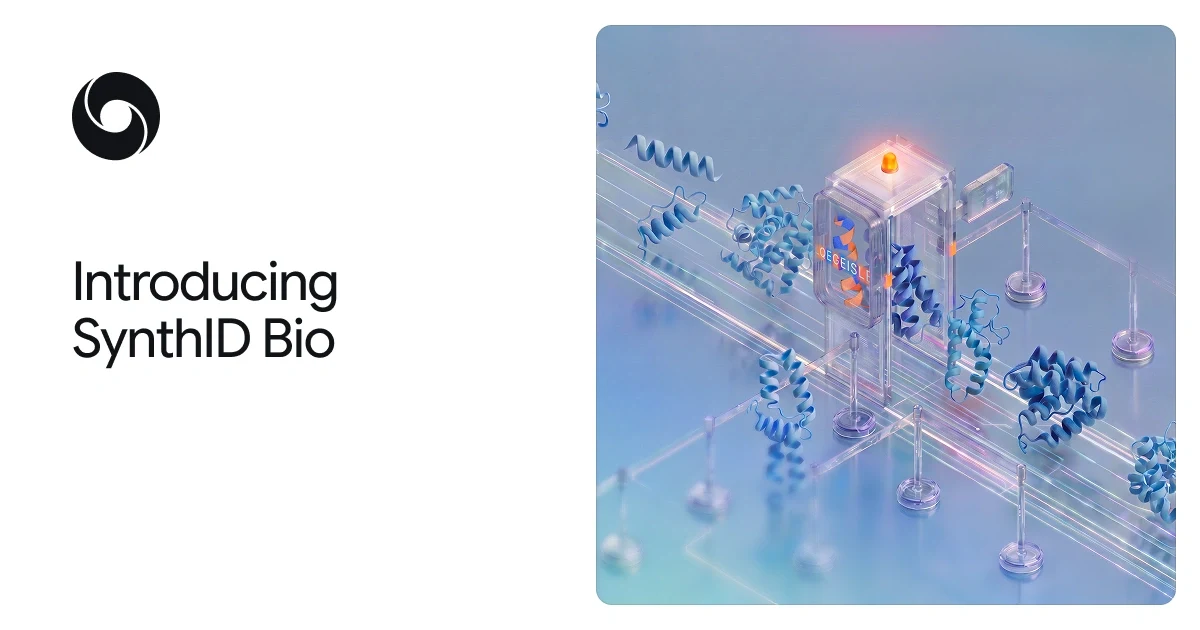
DeepMind’s blog says SynthID Bio brings watermarking to synthetic biology—embedding an imperceptible signature in biological code so it is verifiable on the synthesized physical protein as well as the digital model, while preserving function in lab testing. Motivations include AI designs that may bypass traditional DNA synthesis screening and mislabeled synthetic 3D structures that can pollute public databases. SynthID Bio is a family of methods: subtly guiding amino-acid choices for sequences and adjusting atomic coordinates for predicted structures to create a detectable signal.
The company says it watermarked protein binders with AlphaProteo plus a SynthID Bio-enabled ProteinMPNN; across three targets (VEGF-A, SARS-CoV-2 spike RBD, PD-L1), watermarked designs matched unwatermarked versions on hit rate, binding affinity, and natural sequence diversity, claimed as the first watermarked and biologically functional protein binders. For folding, it fine-tunes a small part of AlphaFold 3’s diffusion network so predicted coordinates carry a detectable signature, claiming near-perfect detectability while preserving accuracy and resisting digital noise or minor coordinate changes. Those results are DeepMind’s own account; Science and related citations were access_denied, captcha-blocked, or unread this batch and are not treated as verified peer-review text here.
On biosecurity narrative, the post frames watermarks as one verifiable layer in a “Swiss cheese” defense, helping synthesis providers recognize orders from trusted safeguarded models, and helping databases such as PDB, UniProt, and GenBank label synthetic entries. It says no single intervention is a silver bullet; key challenges include robustness to deliberate tampering, with plans to pair watermarks with provenance metadata akin to C2PA. Ongoing work with Stanford’s Hie lab and Arc Institute reportedly integrated SynthID Bio into genomic model Evo 2 to watermark a designed bacteriophage genome; early bacterial-culture tests are said to show functional watermarked phages, with a technical manuscript to follow. The company says it will publish methods and open-source code, in-vitro data, and weights. This draft does not add claims from unread references.
Sources
- SynthID Bio: Watermarking methods for synthetic biology — deepmind.google